What Does Nervous System Dysregulation Feel Like? 10 Common Signs
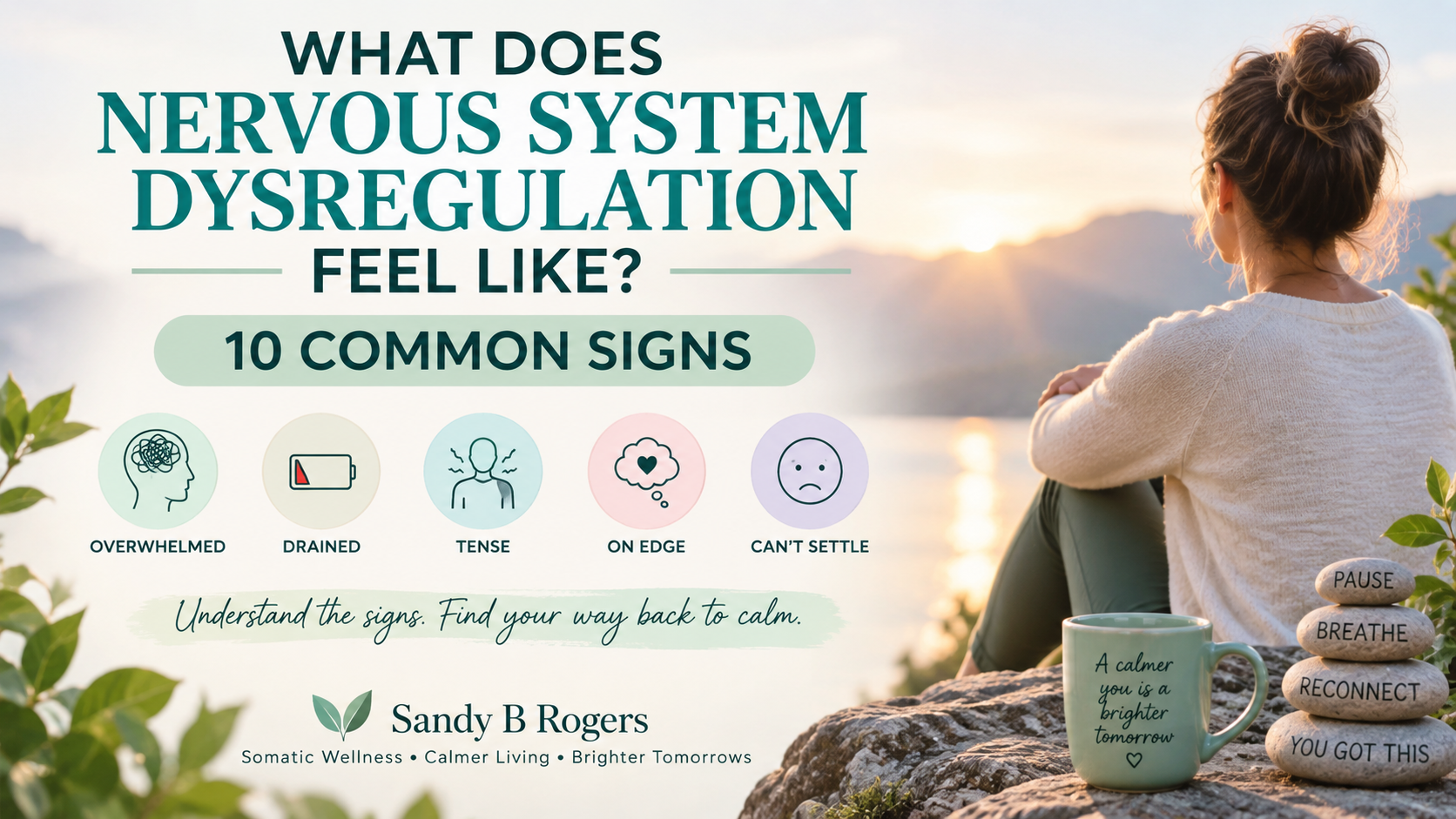
Have you ever felt like your body is still under pressure even when nothing particularly stressful is happening?
You might feel tense for no obvious reason, find yourself constantly on edge, struggle to settle down at the end of the day, or become overwhelmed by things that normally wouldn't bother you.
These experiences can sometimes be associated with nervous system dysregulation—a term commonly used to describe difficulty shifting between states of activation and settling after stress.
Understanding these signs can be a useful first step toward noticing what your body may be communicating and learning ways to support greater regulation and resilience.
Important: Nervous system dysregulation is not a diagnosis. Persistent or severe symptoms can have many possible causes, so this article is intended for general education rather than medical advice.
What Is Nervous System Dysregulation?
Nervous system dysregulation describes a pattern in which the body has difficulty adjusting its level of activation in response to stress, demands, or changes in the environment.
Your nervous system constantly takes in information and helps your body respond. When something feels demanding or threatening, your body may become more activated. This can be useful in the moment—it helps you pay attention, respond quickly, and meet a challenge.
Difficulty can arise when your body stays highly activated after the demand has passed, or when it becomes hard to shift out of a shut-down, depleted, or overwhelmed state.
Regulation does not mean feeling calm all the time. A healthy nervous system still responds to challenges, excitement, uncertainty, and pressure. The goal is flexibility: being able to activate when needed and gradually return toward a steadier state when the situation allows.
What Does Nervous System Dysregulation Feel Like?
The signs of nervous system dysregulation can look different from person to person. They may show up in your thoughts, emotions, body sensations, behaviour, sleep, or ability to cope with everyday demands.
Having one or more of these experiences does not automatically mean your nervous system is dysregulated. Stress, sleep, health conditions, medications, life circumstances, and many other factors can affect how you feel.
Noticing these patterns isn't about labelling yourself. It is to become more aware of how your body responds and whether you can settle, recover, and return to a steadier state.
10 Common Signs of Nervous System Dysregulation
1. You Feel Constantly On Edge
You may feel as though you are always waiting for something to go wrong, even when there is no immediate danger. Your body may remain tense or alert, making it difficult to fully relax or feel at ease.
You might notice yourself scanning your surroundings, reacting strongly to small changes, or struggling to switch off at the end of the day. This can be especially noticeable when you have been dealing with prolonged stress or repeated demands.
2. You Feel Overwhelmed by Everyday Demands
Tasks that once felt manageable may suddenly seem like too much. You might find yourself struggling to prioritize, make decisions, or know where to begin when several demands arrive at once.
Feeling overwhelmed does not necessarily mean you have too much to do. Sometimes your body's stress response can make ordinary demands feel harder to manage, especially when you haven't had enough time to recover.
3. Your Body Feels Tense or Restless
Physical tension can be one of the more noticeable signs that your body is having difficulty settling. You may notice tightness in your shoulders, jaw, neck, chest, or other areas.
You may also feel restless, fidgety, or unable to get comfortable even when you have time to rest. Sometimes your body stays prepared for action when nothing immediately demands it.
4. You Have Difficulty Settling Down
You may find that your body and mind stay activated long after a stressful situation has ended. Even when you have finished work or have nothing urgent to deal with, you may struggle to slow down.
You might keep thinking about what happened, feel unable to switch off, or find that activities meant to help you relax don't work as well as they once did. The transition from activity and alertness to rest may feel harder than it should.
5. You Feel Drained Even After Rest
You may feel physically or mentally depleted even after resting. Ordinary tasks may take more effort than usual, and your energy may seem to disappear quickly.
Stress can be demanding on both the body and mind. If you are spending a lot of time in a state of alertness or tension, it may become harder to feel restored by your usual periods of rest.
6. You Become More Sensitive to Stress
Situations that you once handled reasonably well may begin to feel unusually difficult or intense. A busy day, a difficult conversation, unexpected changes, or several small demands at once may leave you feeling overwhelmed more quickly.
You may notice that your reactions seem stronger than you would expect from the situation. This does not mean you are overreacting or failing to cope. It may simply mean your overall stress load is high and your capacity to handle additional demands is temporarily reduced.
7. Your Sleep Becomes Disrupted
You may have difficulty falling asleep, staying asleep, or waking up feeling refreshed. Your mind may remain active at bedtime, or you may wake during the night and find it difficult to settle again.
Stress can affect sleep in different ways, and poor sleep can in turn make it harder to manage the demands of the following day. If sleep changes persist, consider other possible causes as well, rather than assuming stress is the only explanation.
8. Your Thoughts Feel Difficult to Switch Off
Your mind may continue running even when you want to rest. You might replay conversations, anticipate problems, make lists in your head, or find yourself thinking through the same issue repeatedly.
It can feel as though your thoughts are moving faster than you would like. Pausing may become difficult, especially after a demanding day or during periods of ongoing stress.
9. You Feel More Reactive or Irritable
You may notice that your emotional reactions feel stronger or arrive more quickly than they used to. Small frustrations can feel harder to tolerate, and you may become irritated, impatient, tearful, or upset more easily.
This can happen when your system is already carrying a high level of stress. When your capacity is reduced, even relatively minor demands may feel like they require more effort than usual.
10. You Find It Harder to Feel Present and Connected
You may feel disconnected from yourself, your surroundings, or the people around you. At times, you might go through the motions without feeling fully engaged in what is happening.
You may also notice it is harder to identify what you need or to recognize when you are becoming stressed. Developing greater awareness of your body's signals can be an important part of learning to respond to those signals with more flexibility.
What Can You Do If You Recognize These Signs?
Recognizing these patterns is not about diagnosing yourself or trying to force your body to become calm. It is about becoming more curious about what you notice and giving your nervous system opportunities to recover.
Start with the basics: regular sleep, nourishing meals, gentle movement, time outdoors, supportive relationships, and periods of genuine rest can all contribute to your ability to cope with stress.
You can also begin paying attention to your body's signals. Notice when tension increases, when you start to feel overwhelmed, and what helps you return toward a steadier state. Small, repeatable practices are often more useful than trying to change everything at once.
If symptoms are persistent, severe, or interfering with your daily life, consider speaking with an appropriately qualified healthcare professional. Physical, psychological, medication-related, or other factors may be worth exploring.
A Gentle Next Step
You do not need to change everything at once. The first step can simply be noticing what your body is telling you and becoming more familiar with your own patterns of stress and recovery.
If you would like to explore the basics further, read What Is Nervous System Regulation? A Beginner's Guide to learn more about regulation, stress responses, and returning toward a steadier state.
You can also try a simple, structured approach with my free 7-Day Nervous System Reset Challenge. It offers a gentle way to begin noticing your body's signals and practising small steps toward greater regulation and resilience.
Your nervous system does not need perfection. It needs opportunities to pause, recover, and build capacity over time.
